Mentorship · Career readiness · November 2, 2026
Beyond the Application: How to Stand Out as a Candidate
Written by Shirley Adubofour, M.A.

ACCESS Mentorship | Career Readiness & Professional Development
You applied for the internship. Now what?
We live in a world where applying for an internship or job can take only a few clicks. Résumés are uploaded, cover letters are submitted, and applications enter digital hiring systems.
Technology has made opportunities more accessible. However, I believe that as our professional interactions become increasingly digital, we are beginning to overlook something essential: the importance of genuine human connection.
We apply, wait for a response, and sometimes move on without ever attempting to connect with the people behind the organization.
But professional growth has never been solely about submitting applications. It is also about developing relationships, communicating your value, demonstrating initiative, and learning how to navigate unfamiliar environments.
At ACCESS, we believe that access is only the beginning.
Securing the opportunity to apply is one step. Understanding how to position yourself as a strong candidate is another.
So, you've submitted your internship application. What should you do next?
1. Your Résumé Should Communicate Value, Not Just Responsibilities
One of the most common mistakes students make when developing their résumés is focusing exclusively on what they were responsible for rather than what they contributed.
Employers want to understand your abilities, experiences, and potential to contribute to their organization.
You do not need extensive professional experience to create a strong résumé. Academic projects, student leadership, volunteering, part-time employment, and community involvement can all demonstrate transferable skills.
The key is knowing how to communicate those experiences effectively.
Example 1: Customer Service Experience
Instead of
“Helped customers and answered questions.”
Communicate your value
“Assisted customers by addressing inquiries, resolving service concerns, and communicating product information to support a positive customer experience.”
Example 2: Student Leadership
Instead of
“Helped organize school events.”
Communicate your value
“Collaborated with student leaders to coordinate campus events, manage event logistics, and support participant engagement.”
Example 3: Academic Research
Instead of
“Completed a research project for class.”
Communicate your value
“Conducted academic research, analyzed information from multiple sources, and presented evidence-based findings through written reports and presentations.”
Notice the difference.
Each revised statement communicates skills that may be valuable in a professional environment, including communication, organization, collaboration, research, and problem-solving.
When possible, include measurable accomplishments. For example, if you organized an event attended by 75 students, including that verified number can help demonstrate the scale of your contribution.
ACCESS Tip: Use action verbs such as analyzed, coordinated, developed, researched, facilitated, organized, evaluated, and collaborated.
Always ensure that the language accurately represents your actual experience.
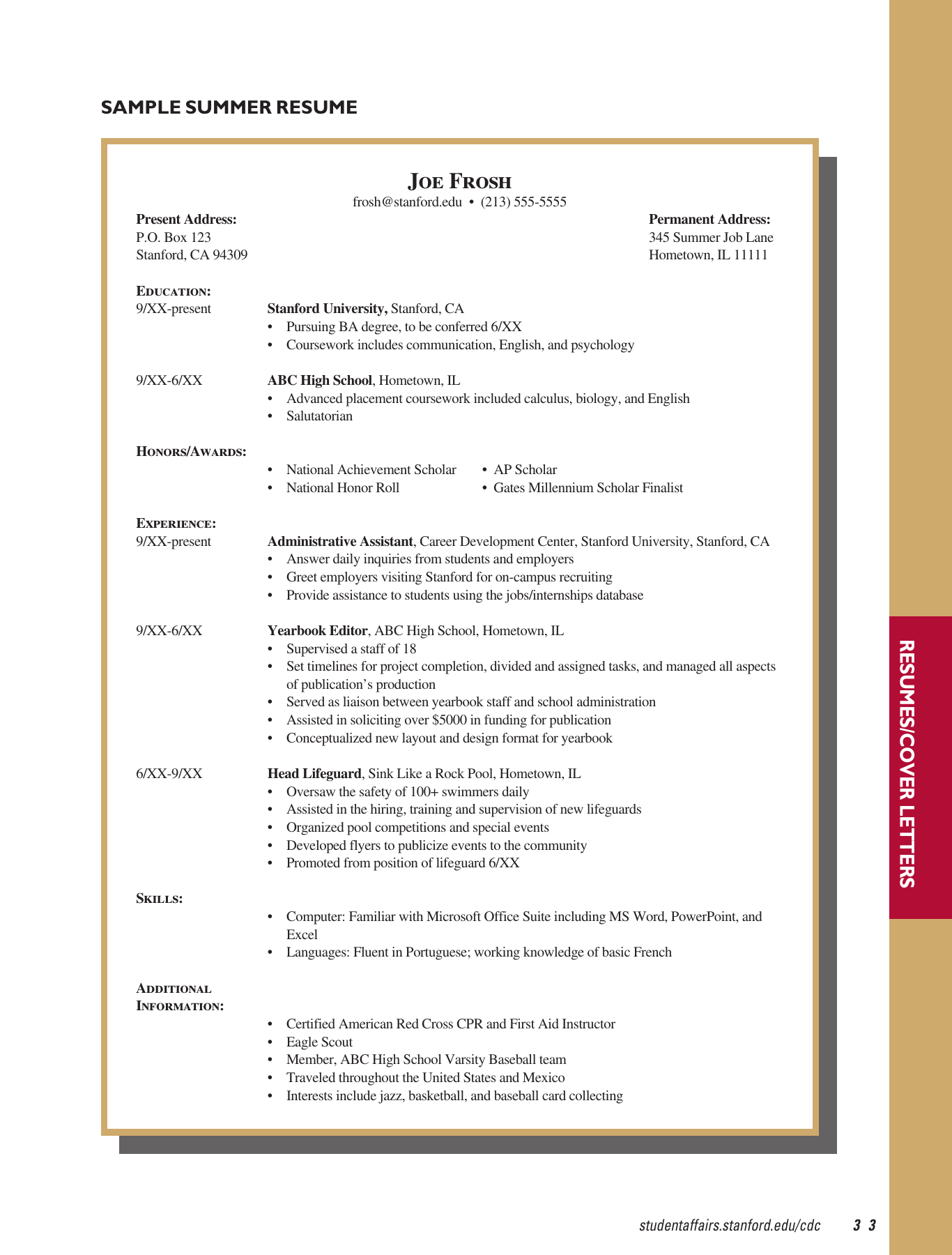
Free Resource: Sample Internship Résumés
Not sure how to structure your résumé or describe your experience?
Explore student résumé examples to see how academic experiences, volunteer work, and transferable skills can be presented professionally.
Use only experiences and accomplishments that are true for you.
 View full size
Sample summer résumé
Source →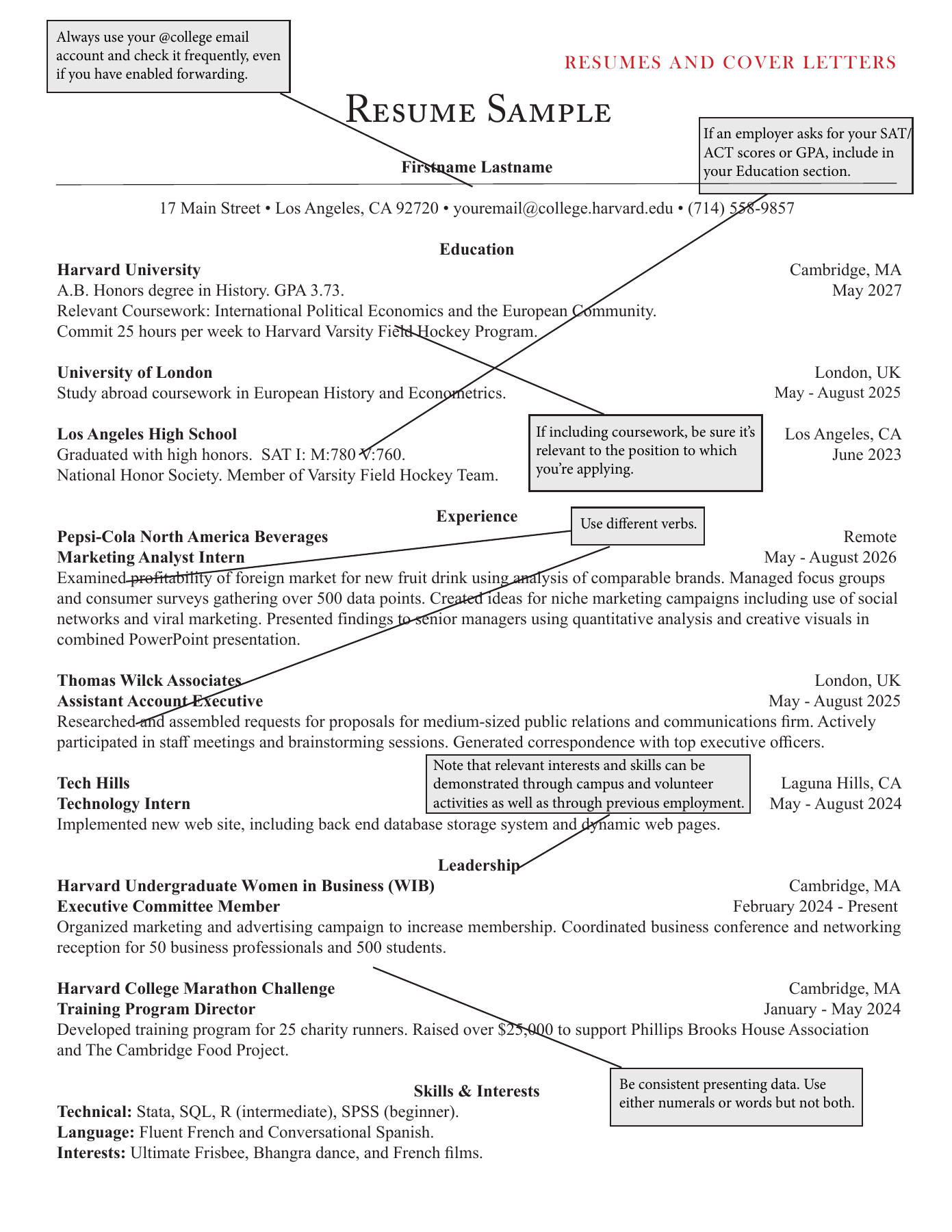 View full size
Annotated résumé example
Source →These examples are intended to help you develop your own résumé, not replace your individual experiences or accomplishments.
2. Communicate Your Interest With Purpose
Your résumé introduces your qualifications, but your professional communication helps others understand your motivation.
Generic statements such as "I am a hard worker" or "I really want this opportunity" do not always explain what makes you a compelling candidate.
Instead, communicate what interests you about the organization, what skills you bring, and what you hope to learn.
Example: Expressing Interest in an Internship
Instead of
“I want this internship because I need experience.”
Communicate your value
“I am interested in this internship because it would allow me to apply my academic knowledge, strengthen my professional skills, and contribute to projects aligned with the organization's mission.”
Example: Describing Your Strengths
Instead of
“I am a fast learner and a team player.”
Communicate your value
“Through my academic and extracurricular experiences, I have developed the ability to adapt to new responsibilities, collaborate with diverse teams, and manage competing priorities.”
Example: Explaining Why You Want to Join an Organization
"I am particularly drawn to your organization's commitment to [specific mission or initiative]. I would welcome the opportunity to contribute my skills in [relevant area] while learning from professionals whose work aligns with my long-term interests."
The strongest professional language is not necessarily the most complicated.
It is language that is specific, intentional, and authentic.
3. You Applied. Now Do What You Might Be Afraid to Do.
Make the connection.
This is where I believe many students can challenge themselves to think differently.
We have become accustomed to submitting applications online and waiting for someone to contact us.
But what if you took an additional step?
What if you introduced yourself?
What if you reached out to someone already working at the organization?
What if you asked a thoughtful question?
These actions may feel uncomfortable, especially when you are beginning your professional journey.
However, learning how to initiate conversations is an important professional skill.
The objective is not to pressure an employer into hiring you. It is to demonstrate genuine interest, develop your confidence, and learn more about the people and environments you hope to join.
Practical Step: Contact the Organization
If the organization welcomes applicant inquiries, consider calling or emailing the appropriate office.
You might say:
"Good morning, my name is [Your Name]. I recently applied for the [Internship Position] and wanted to introduce myself. I am very interested in the opportunity and wanted to ask whether there are any additional steps or materials I should prepare. Thank you for your time."
Keep your introduction brief, respectful, and professional.
If an organization specifically requests that applicants not call, respect that instruction.
Practical Step: Connect With Current Employees
LinkedIn can be a valuable resource for identifying professionals working in your field of interest.
Rather than immediately asking someone for a job or referral, begin by expressing genuine curiosity about their experience.
To[Name] · [Department or Field]
A thoughtful message can begin a professional relationship, even when it does not immediately lead to employment.
4. Follow Up Professionally and With Intention
Submitting an application does not always mean your work is finished.
Following up appropriately can communicate continued interest and professionalism.
However, timing matters.
If an employer provides a recruitment timeline, follow that guidance. Otherwise, a brief follow-up after approximately one to two weeks may be appropriate, depending on the organization and position.
Sample Follow-Up Email
To[Hiring Manager's Email]
SubjectFollow-Up on [Position Title] Internship Application
Remember, the purpose of following up is not to demand an immediate decision.
It is to communicate your interest while respecting the organization's hiring process.
5. Build Relationships Before You Need an Opportunity
One of the most important professional lessons students can learn is that relationships should not begin only when they need something.
A professor, supervisor, alumnus, mentor, or professional connection may offer guidance that influences your career long before an employment opportunity becomes available.
Consider making relationship-building part of your professional development routine.
Practical Steps You Can Take This Month
- Identify three professionals whose work aligns with your interests and learn about their career paths.
- Reach out to one alumnus or professional with a thoughtful, personalized message.
- Attend one career event, workshop, or networking opportunity offered through your school or community.
- Schedule a conversation with career services to review your résumé and identify internship opportunities.
- Follow up after meaningful conversations with a brief thank-you message.
These actions may seem small, but they can help you build confidence and establish a professional network over time.
Networking is not simply about collecting contacts.
It is about developing meaningful relationships rooted in curiosity, respect, and genuine engagement.
6. Prepare for the Interview Before You Receive the Invitation
Many students wait until an employer contacts them before beginning interview preparation.
Instead, use the time after submitting an application to strengthen your readiness.
Research the organization's mission, services, and recent initiatives. Review the internship description and identify the skills the employer is seeking.
Then practice explaining how your experiences connect to those expectations.
Questions to Practice
"Tell me about yourself."
Develop a concise introduction that connects your education, relevant experiences, and professional interests.
"Why are you interested in this internship?"
Explain what specifically attracts you to the organization and how the opportunity connects to your goals.
"Tell me about a challenge you experienced."
Use a real example to explain the situation, the actions you took, and what you learned.
"What would you contribute to our team?"
Identify relevant skills and support your answer with examples from your experiences.
You should also prepare thoughtful questions for the interviewer.
For example:
"What qualities have helped previous interns succeed within your organization?"
This demonstrates that you are thinking beyond simply obtaining the position and considering how to contribute effectively.
7. Think Beyond the Internship: Position Yourself for Future Opportunities
Securing a spring internship can be an important step toward longer-term professional development.
A successful internship may provide opportunities to develop practical skills, build professional relationships, and gain a deeper understanding of an organization.
In some cases, it may also lead to an internship extension, summer employment, a professional referral, or consideration for a future position.
However, these outcomes are not guaranteed.
What matters is how intentionally you approach the experience.
If you secure an internship, demonstrate reliability, seek feedback, ask thoughtful questions, and take initiative when appropriate.
As the internship progresses, consider asking your supervisor:
"I have really appreciated the opportunity to contribute to the team and learn from this experience. Are there opportunities to continue supporting the organization during the summer, or any next steps you would recommend for someone interested in continuing in this field?"
The goal is not simply to secure an internship.
It is to understand how that experience can become a foundation for future opportunities.
The ACCESS Perspective: Be More Than an Application
At ACCESS, our philosophy is grounded in a simple belief:
Access is only the beginning.
Having the opportunity to submit an application does not automatically mean you know how to navigate the hiring process, communicate your qualifications, or build relationships within an unfamiliar professional environment.
Those skills must be developed intentionally.
I believe that in a world increasingly shaped by digital communication, we must be careful not to lose the human connections that make professional development meaningful.
Technology can help us discover opportunities. But meaningful relationships can help us understand those opportunities, learn from others, and navigate the environments we hope to enter.
Not every message will receive a response.
Not every application will lead to an interview.
And not every professional conversation will result in an employment opportunity.
Nevertheless, the process of introducing yourself, communicating with confidence, asking questions, and building genuine relationships can strengthen your ability to navigate future opportunities.
So, if you have already submitted your internship application, consider this your encouragement to take the next step.
Reach out. Introduce yourself. Ask the question. Prepare for the conversation.
Sometimes, the most meaningful professional growth begins when you challenge yourself to do something unfamiliar.
Your application may open the door. Your preparation, initiative, and relationships can help you navigate what comes next.
ACCESS Mentorship
Equipping students with the knowledge, mentorship, resources, and strategies to navigate opportunities and sustain long-term success.
Website: www.accessconsultingagency.com
Email: info@accessconsultingagency.com